
What the Vertical Machining Center V Series is trying to solve
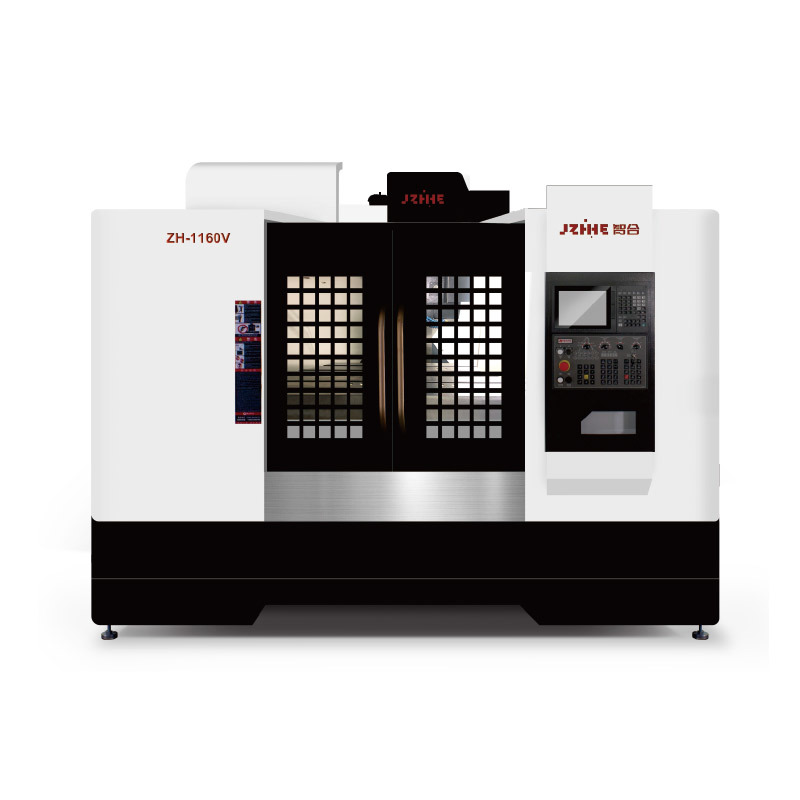
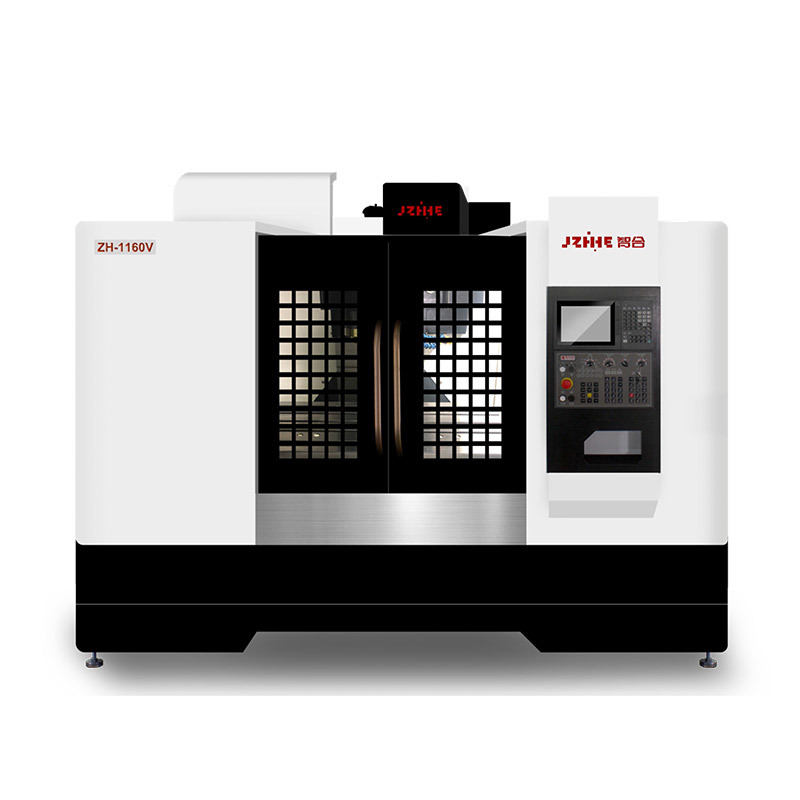
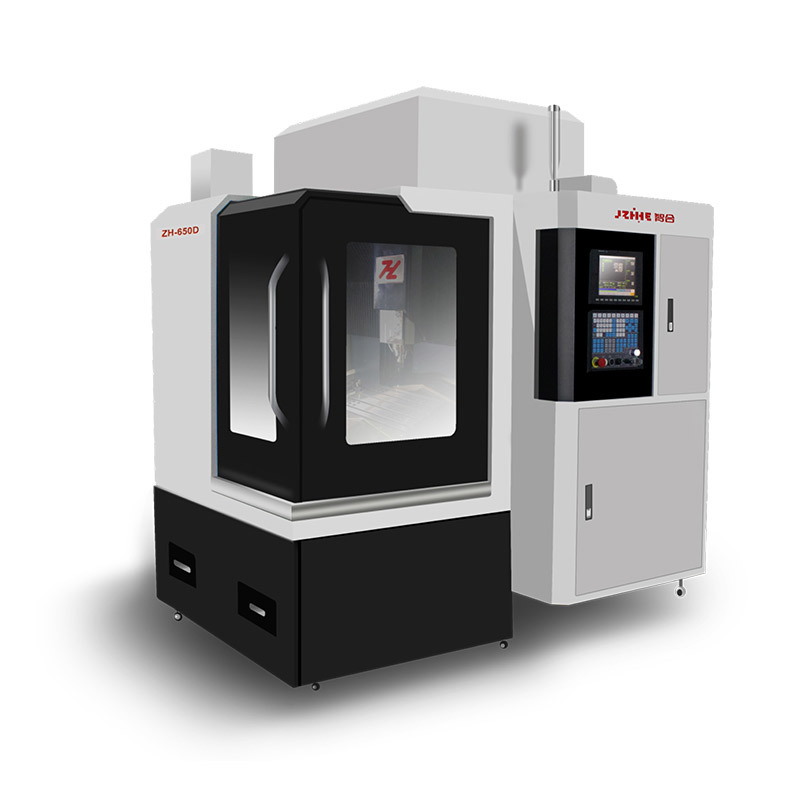
The Vertical Machining Center V Series is the kind of machine buyers usually come to when they have outgrown general-purpose milling and need repeatable, enclosed, production-friendly machining. In practical terms, that means a vertical CNC machining center built for precision metal cutting, stable accuracy, and cleaner shop-floor operation than an open manual setup can offer. The model marking shown as ZH-1160V and the JZHE branding point to a compact, enclosed vertical format with a front access door and side-mounted control panel, which is exactly the sort of layout many engineers prefer when they need parts made reliably rather than theatrically.
That matters because the real purchase decision is rarely “Do we need a machine?” It is usually “Do we need throughput, consistency, chip control, and operator safety in one package?” For production parts, especially when tolerances are tight and setups repeat often, the machine structure and axis behavior matter as much as the controller on the front.
Quick read: what stands out in this class of machine
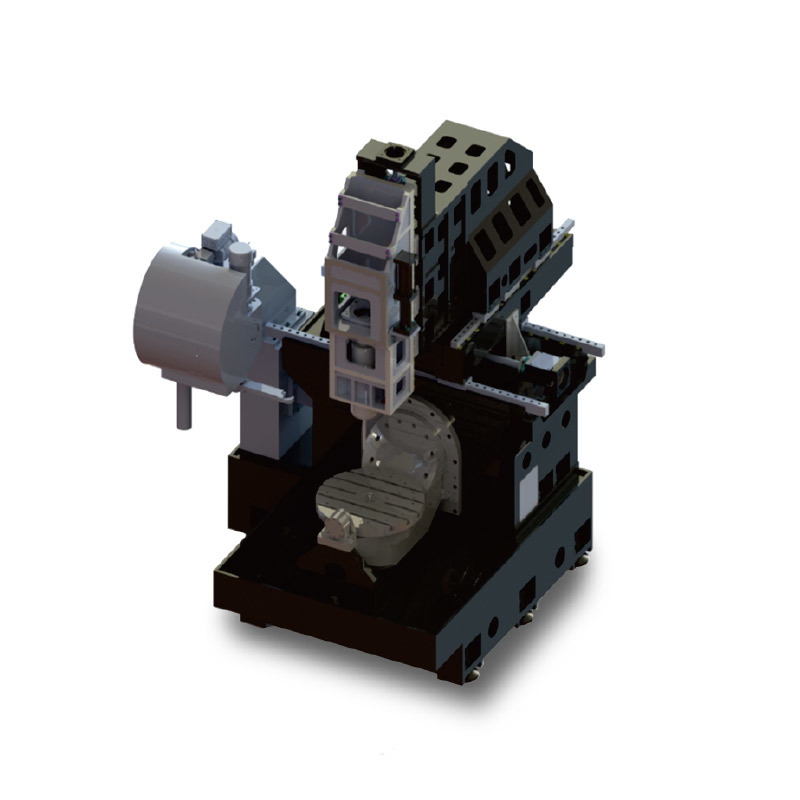
The V Series style shown here appears to be a 3-axis vertical milling machine with an enclosed machining chamber, a fixed-column, cross-slide table arrangement, and a rigid base designed to resist vibration. The supplied notes mention heavy-duty roller linear guides on all three axes, a wide-span A-frame column, and an extra-large monolithic base. That combination usually signals an emphasis on rigidity and dynamic response rather than lightweight flexibility.
For buyers, the practical takeaway is simple: this is the kind of machine you consider when you need a compact footprint, decent chip containment, and enough structural stiffness to support repetitive precision work. It is not the machine you choose because it looks easy to operate; it is the machine you choose because it is easier to keep a process under control.
Why the machine structure matters more than the brochure language
A lot of CNC marketing leans on broad claims about speed, accuracy, and productivity. Engineers know those words only mean something when the machine’s structure supports them. The visible enclosure, the heavy base, and the fixed-column layout all point in the right direction. A rigid frame is not a luxury in vertical machining; it is the foundation for positional stability, better surface consistency, and less chatter when the cutting load rises.
The notes also mention vibration resistance and deformation control. That is worth paying attention to, because once a machine starts flexing under load, the entire process chain suffers. Tool life shortens, dimensional variation grows, and the operator ends up compensating with extra checks or slower feeds. None of that is free.
A rear-mounted high-pressure coolant and chip evacuation system is another detail that sounds mundane until you have to run long batches. Good chip removal helps keep the cutting zone cleaner, reduces re-cutting, and lowers the odds of nuisance downtime. In a production environment, that can matter more than a headline spindle number that nobody actually runs all day.
Where a Vertical Machining Center V Series fits best
The likely application range supplied here includes 5G communication structural components, automotive parts, medical devices, small precision assemblies, and general precision metal parts. That is a sensible spread for a vertical machining center with an enclosed working area and a focus on accuracy and process stability.
For 5G and communication hardware, the value is usually in repeatable hole locations, flatness control, and clean edge quality on structural parts. Automotive work often pushes a machine toward volume, fixture consistency, and cycle discipline. Medical device components can be unforgiving on burrs and repeatability, even when the part itself is small. In each case, the machine has to support the process rather than force operators to fight it.
That said, a buyer should not overread the application list. A vertical machining center can be a fit for many parts, but only if the spindle configuration, tooling strategy, and axis travels match the real part family. The model designation alone does not tell you everything, and it should not be treated like a substitute for a proper process review.
Key construction details worth noticing
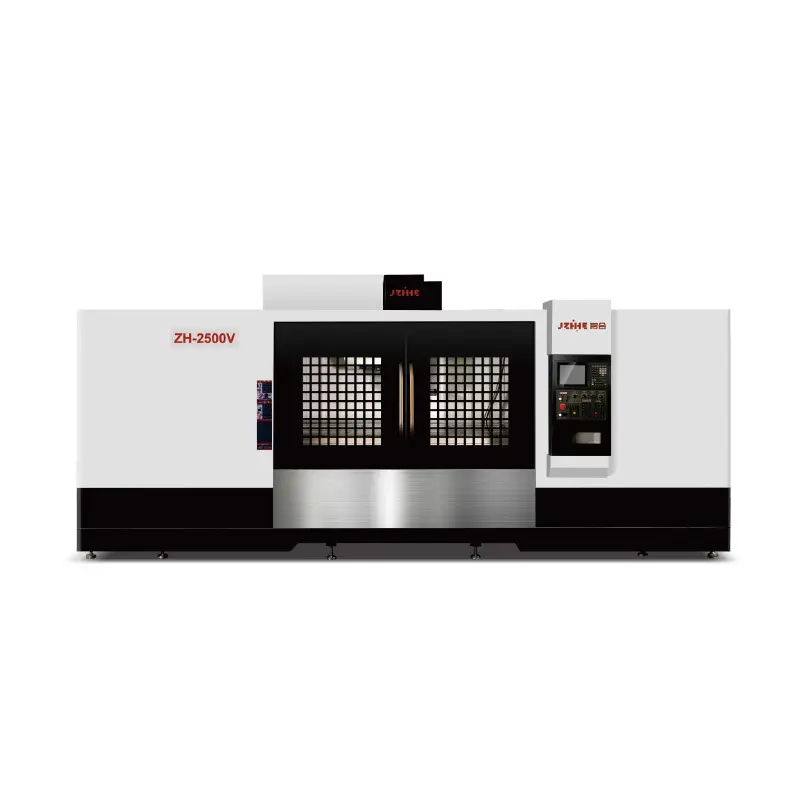
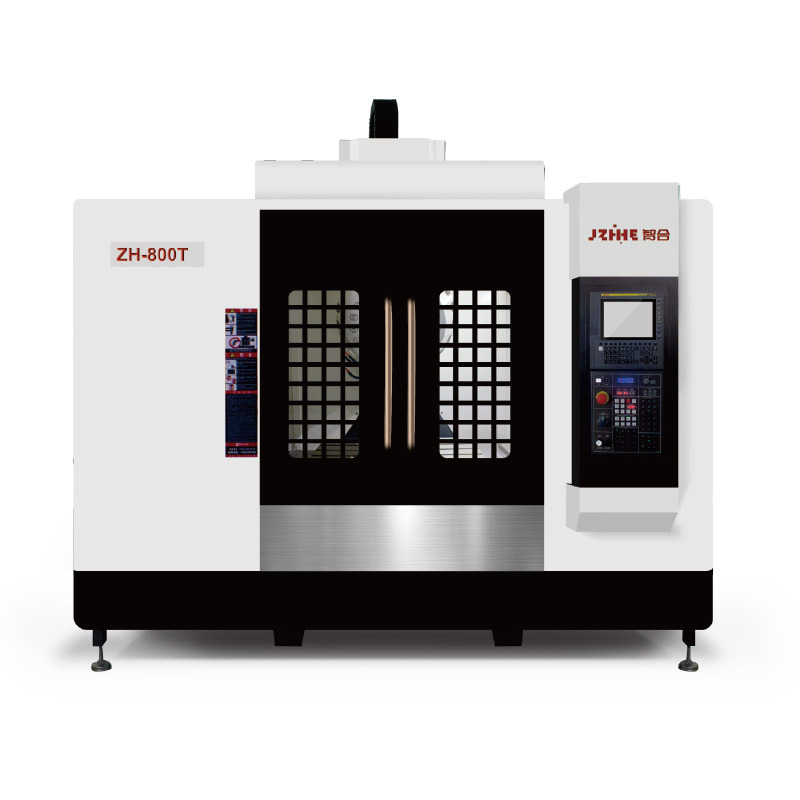
The enclosed box-style layout is one of the first things sourcing teams will notice. Front safety doors with grid-style viewing panels suggest standard operator visibility and containment of chips and coolant. That matters not just for safety, but also for keeping the surrounding area manageable. Open machines can be perfectly capable, yet they tend to spread the mess around the shop faster than anyone wants.
The side-mounted control console is another practical sign. It keeps the operator interface separate from the machining chamber and usually makes the machine easier to integrate into a real production cell. Leveling feet at the base also indicate that the machine is meant to be installed carefully and stabilized properly, which sounds obvious, but in practice it is where too many installations are rushed.
The notes mention a wide-span A-frame column and an extra-large monolithic base. Even without exact material confirmation, those phrases suggest a design aimed at stiffness and load distribution. In machine tools, geometry is often the real story. A good-looking enclosure does not cut parts; a well-supported frame does.
Selection criteria buyers should use before shortlisting this type of VMC
When evaluating a Vertical Machining Center V Series or a similar vertical CNC platform, start with part geometry and cycle demands. If the parts are compact, require multiple faces, and benefit from automated repeatability, the vertical format is usually a good fit. If the job depends on unusually long travel, very heavy workpieces, or aggressive five-sided machining, the buyer should compare this against other machine architectures before deciding.
Then look at three areas with a slightly skeptical eye:
1. Rigidity versus claimed speed
Fast axis motion sounds attractive, but in production, stability often pays back more consistently. Ask how the machine maintains positioning under load and how the structure manages vibration.
2. Chip and coolant management
The presence of rear-mounted high-pressure coolant and chip evacuation is a useful sign, but buyers should still check how easy the machine is to clean and service. Maintenance access can be the difference between a useful production asset and a machine that everyone avoids after lunch.
3. Serviceability and daily setup
An enclosed vertical machine should make routine work easier, not harder. Tool changes, door access, cleaning, and inspection points all influence real productivity. A machine that is technically capable but awkward to service can become expensive in subtle ways.
Common mistakes when comparing machines in this category
One common mistake is buying on footprint alone. A compact machine is attractive, especially on a crowded shop floor, but if the base is too light or the chip evacuation is weak, the savings disappear in rework and maintenance.
Another mistake is assuming all 3-axis vertical machines are interchangeable. They are not. Guide type, column stiffness, enclosure layout, and coolant handling can change the character of the machine more than a casual comparison suggests.
A third issue is not aligning the machine to the part mix. A buyer might be focused on a current job, but the real purchase should look at the next several years of work. If the shop is moving toward higher-mix precision components, the machine needs to support flexible setups and stable repeatability. If the work is high-volume and repetitive, process robustness becomes more important than versatility.
Practical buyer advice before you ask for a quote
Before sending out an RFQ, build a short list of must-haves from the actual part. Include material type, part envelope, number of operations, fixture approach, and the quality risks that matter most. If the part family includes thin walls, deep pockets, or fine features, say so clearly. That helps separate a machine that simply looks suitable from one that is genuinely capable.
Also ask for the information that is not visible in a product photo: spindle power and speed range, travel limits, table size, tool magazine capacity, controller brand, and service support structure. The provided data does not confirm those details, so buyers should treat them as open questions, not assumptions.
If your process depends on consistent chip evacuation, ask how the coolant system is arranged and how maintenance is handled. If you plan to run lights-out or extended batches, that conversation becomes even more important. Machines in this class can perform very well, but only if the peripheral systems are given the same attention as the cutting envelope.
FAQ for sourcing and engineering teams
Is the Vertical Machining Center V Series the same as any vertical CNC machine?
Not exactly. It appears to be a vertical CNC machining center in the VMC category, but the exact platform details, controller, and specifications are not confirmed here. The visible format strongly suggests a standard enclosed vertical machining center.
What kind of work is this machine best suited for?
General precision metal parts, small assemblies, and production work where repeatability and chip control matter. The supplied notes also point to communication hardware, automotive parts, and medical device components.
Should buyers focus on the enclosure or the cutting specs first?
Both, but not in the same way. Cutting specs define capability, while enclosure and structure affect how that capability holds up in daily production. In many shops, the second part is what separates a good purchase from a regrettable one.
What to do next
If you are evaluating the Vertical Machining Center V Series for a new line or a replacement machine, start with your part family and production target, then request the missing technical data against those needs. A machine like the ZH-1160V should be judged on how it supports your process: rigidity, chip management, accessibility, and repeatable performance in the parts you actually run.
For sourcing teams, that means asking for the numbers. For engineers, it means checking the structure against the cut. And for product teams, it means making sure the machine fits the manufacturing plan instead of just the brochure.